The lower middle market M&A market is active heading into the second half of 2026, but closing deals has gotten meaningfully harder. Valuation misalignment is now the single biggest reason deals fail to close. Sellers who come to market with clean financials, a defensible valuation, and realistic expectations are closing. Those who do not are stalling. The window is real, but preparation is what gets you through it.
Axial, one of the largest private deal networks serving the lower middle market, published their 2H 2026 M&A Outlook this month as a two-part series. Part 1 draws on survey data from 79 dealmakers across both the buy side and sell side. Part 2 focuses specifically on buyer perspectives from 40 investors and acquirers.
For business owners thinking about a transaction in the next one to three years, the findings are worth understanding. This post breaks down what the data says and what it means in practice. The full reports are available directly from Axial: Part 1 (market overview) and Part 2 (buyer outlook).
The Market Is Active — But Closing Has Gotten Harder
The headline from the Axial survey is constructive: 87% of dealmakers expect lower middle market M&A activity to remain steady or increase in the second half of 2026. Deal volume on Axial’s platform hit a quarterly record in Q2 2026, with 3,523 deals coming to market, the highest total on record.
Buyers are showing up. The pipeline is moving.
But completing transactions is a different story. On the buy side, 53% of buyers reported greater difficulty closing deals than anticipated, up sharply from the 18% who expected a challenging environment at the start of 2026. That gap between expectation and reality tells you something important: the market is open, but execution is harder.
87% of dealmakers expect LMM activity to remain steady or increase in 2H 2026. But 53% of buyers say closing has been harder than expected, nearly triple the 18% who anticipated difficulty at the start of the year.
Valuation Misalignment Is Now the Biggest Deal Killer
The single most significant finding in the Axial report is the shift in why deals are failing. Valuation expectations were cited as the leading cause of failed deals in 1H 2026 by 57% of surveyed dealmakers. That is more than double the 28% who said the same for deals that fell apart in 2025.
For context, the other major causes all declined: diligence findings fell from 25% to 10%, macroeconomic uncertainty dropped from 21% to 9%, and financing constraints fell from 18% to 8%.
The market has not gotten riskier from a diligence or financing standpoint. The friction has shifted squarely to price expectations.
What Is Driving Valuation Pressure in Both Directions?
Buyer competition for quality assets is the leading driver of upward valuation pressure, cited by 58% of respondents and up 12 percentage points since the start of the year. Supply of quality businesses has not expanded to match buyer appetite, which keeps competition strong for the right assets.
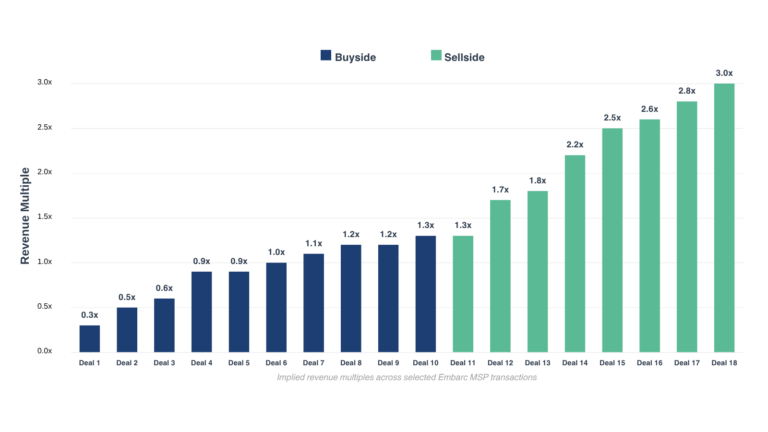
On the downside, business performance and the cost of financing are the leading constraints. Interest rates have stabilized at a higher baseline, which reduces debt capacity and limits how much buyers can pay. Several survey respondents noted that headline multiples can look stable while deal structure changes underneath, with more seller financing, earnouts, and holdbacks shifting risk back to the seller.
The gap between what sellers expect and what buyers will pay has become the defining friction point in the current market, not diligence findings, not macro uncertainty, not financing. Price expectations.
Headline Multiples Are Stable — But Watch the Structure
Nearly two-thirds of dealmakers expect valuation multiples to remain stable in 2H 2026. That sounds reassuring. But several survey respondents flagged an important nuance.
Stable headline multiples can mask meaningful changes in how deals are actually structured. Buyers willing to maintain headline prices are increasingly doing so with less cash at closing, offset by seller financing, earnouts tied to post-close performance, and holdbacks. For a seller, an attractive LOI number and an attractive closing check are not always the same thing.
On the buyer side, the share willing to stretch on valuation for a high-quality asset held relatively steady at 45%, but neutral responses nearly tripled from 11% to 32%. Buyers are not retreating from the market. They are becoming more selective and more disciplined on price.
What this means for sellers: understand deal structure as carefully as headline price. Earnouts, holdbacks, and seller financing all affect what you actually receive at close, not just what the LOI says.
Seller Readiness Is What Separates Deals That Close From Deals That Stall
The Axial report consistently surfaces one variable that distinguishes the transactions that close from the ones that pause or fall apart: seller preparation. Multiple respondents noted that deals are being paused due to financial preparedness issues or shifting expectations, not a lack of buyer interest.
Buyer interest is not the problem. Preparation is what converts that interest into a closed transaction.
Preparation in this environment means a few specific things.
Clean, Credible Financials
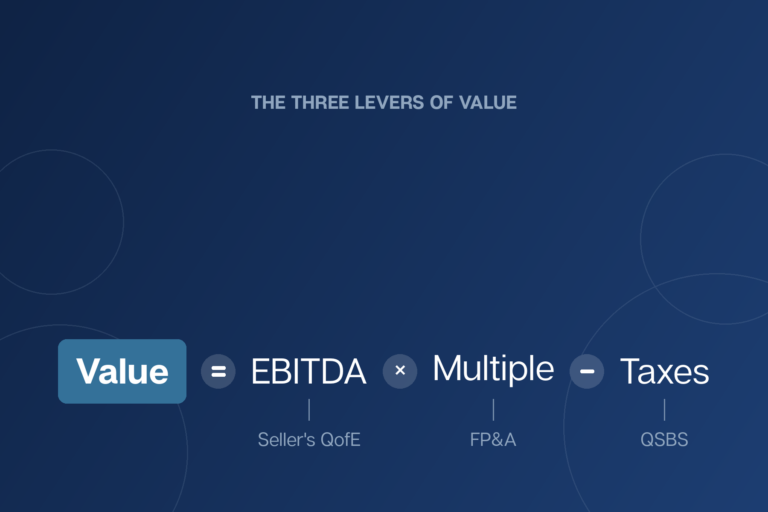
Buyers and their advisors are scrutinizing reported earnings carefully. A quality of earnings process, conducted on the acquisition target, surfaces adjustments before they become negotiating leverage for the buyer. Sellers who know what their numbers look like under scrutiny go into the process with fewer surprises and more control over the narrative.
A Defensible Valuation Expectation
The sellers who struggle in this market are often the ones anchored to peak multiples from 2021 or to comparable transactions that do not actually apply to their business size, sector, or revenue quality. Working through valuation with an advisor before going to market, not during, saves time and protects relationships with buyers.
Financial Infrastructure That Holds Up
Beyond the transaction itself, buyers evaluate whether the business has the systems, reporting, and processes that a new owner can rely on. Businesses with consistent monthly reporting, clear KPI tracking, and a finance function that operates independently of the owner are easier to diligence and easier to close. That preparation has a direct effect on outcomes.
What This Means If You Are Thinking About a Transaction
The lower middle market is active. Buyers are engaged and competition for quality assets remains strong. The macro environment, while uncertain, has become normalized enough that 66% of dealmakers expect its impact to be roughly the same in 2H as it was in 1H. It is a headwind, not a wall.
The sellers who will move transactions successfully through the back half of 2026 are the ones who show up prepared. That means clean financials, a realistic view of valuation, and a business that can withstand scrutiny. That preparation does not happen in the 60 days before going to market. It happens well before.
If you are thinking about a transaction in the next one to three years, now is a good time to assess where you stand.
Frequently Asked Questions
Is the M&A market active in the second half of 2026?
Yes. 87% of lower middle market dealmakers surveyed by Axial expect deal activity to remain steady or increase in 2H 2026. Deal volume hit a quarterly record on Axial’s platform in Q2. Buyer appetite for quality assets remains strong.
Why are deals failing to close in 2026?
Valuation misalignment is the leading cause. 57% of dealmakers cited it as the primary reason deals failed in 1H 2026, more than double the rate from 2025. Diligence issues and financing constraints have declined as causes. The gap between seller expectations and buyer willingness to pay is the central friction point.
Are M&A multiples going up or down in 2026?
Multiples are largely stable. 64% of dealmakers expect valuations to remain steady in 2H 2026. However, deal structure is shifting, with more seller financing, earnouts, and holdbacks, which means sellers may receive less cash at closing even when headline multiples hold.
What makes a business attractive to buyers in the current market?
Buyers are becoming more selective. Businesses with recurring revenue, strong management teams, clean financial reporting, and limited owner dependency continue to attract competitive interest. Weaker businesses are taking longer to transact or stalling entirely.
How should a business owner prepare for a sale in 2026?
Start with your financials. Ensure they are clean, consistent, and would hold up under a quality of earnings process. Develop a realistic view of valuation before going to market. And build the financial infrastructure, reporting, KPIs, forecasting, that a buyer can rely on independently of you. Preparation that starts 12 to 24 months before a transaction produces meaningfully better outcomes than preparation that starts 60 days out.
What is the lower middle market in M&A?
The lower middle market generally refers to businesses with enterprise values between roughly $5 million and $100 million, or EBITDA in the $1 million to $10 million range. It is one of the most active segments of the private M&A market, with thousands of transactions occurring annually through both banked processes and negotiated deals.
Find out if your business is ready for a transaction. Take the Diligence Readiness Assessment