
When founders think about selling their business, the conversation often begins (and usually ends) with the valuation. What multiple can I get? What’s my company worth?
But experienced buyers know something many sellers learn too late: The headline valuation number is only part of the story. What ultimately matters is how that value is structured, defended, and converted into actual cash at close.
Deal structure and strategic finance play a far greater role in determining outcomes than most founders expect. Understanding and proactively managing these hidden factors can materially change both enterprise value and how much liquidity a seller walks away with.
Understanding the Basics of Valuation
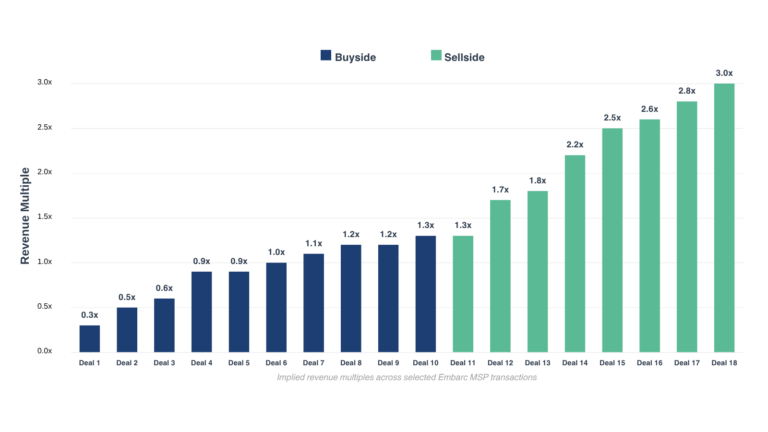
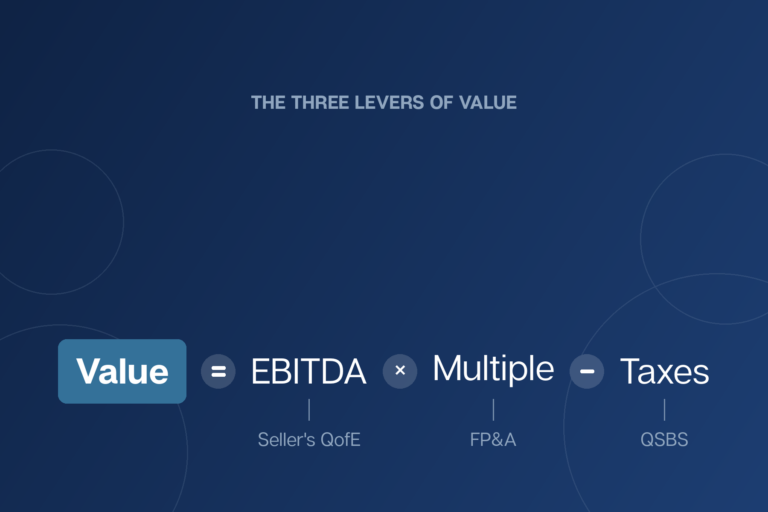
At its most basic level, a valuation is a designated financial metric like EBITDA (earnings before interest, taxes, depreciation, and amortization) times a multiple. Contrary to popular belief, the multiple is not a fixed number dictated solely by industry benchmarks. In practice, it is influenced by several qualitative factors, including:
- How compellingly the company’s growth story is presented.
- The risk factors and how they are mitigated
- How strategically the company’s finances are managed.
- How defensible the numbers are under buyer due diligence.
For example, two companies with similar revenue and EBITDA can receive very different valuations. One may have clean, well-supported financials, thoughtful forecasting, and a clear narrative linking operational decisions to future growth. The other may rely on backward-looking reports, informal add-backs, or assumptions that unravel during diligence. Buyers will price that risk accordingly.
Strategic finance plays a critical role here, ensuring financial performance is clearly understood, credible, and aligned with how buyers evaluate value.
Factors that Actually Affect Cash at Closing
The valuation doesn’t equal cash at closing. Even once the valuation is agreed upon, the amount of cash a seller receives can vary significantly. Deferred consideration such as rolled equity, earnouts, and seller’s notes directly impact liquidity, risk, and timing, which in turn affect how much cash a seller receives at closing. Taxes are another factor that have a significant impact on actual cash to the seller post-close.
Rolled Equity
Rolled equity occurs when a seller reinvests a portion of their sale proceeds into the acquiring entity rather than taking all cash at closing. For example, a founder may roll 20% of their equity into the new platform alongside a private equity sponsor, retaining an ownership stake in the future growth of the business.
When aligned with a strong buyer strategy, rolled equity can be a powerful wealth-creation tool. However, it also concentrates risk and reduces immediate liquidity, making it important for sellers to understand the buyer’s long-term plans and their own tolerance for ongoing exposure.
Earnouts
Earnouts are a form of contingent consideration in which a seller receives additional payments based on the business achieving specific future performance targets. For instance, a seller may earn additional consideration if revenue or EBITDA milestones are met over the 12 to 24 months following the transaction.
Earnouts can be useful for bridging valuation gaps between buyers and sellers, but they require careful structuring. Poorly defined metrics, misaligned incentives, or limited operational control after closing can make earnouts challenging to fully realize.
A recent study by SRS Acquiom indicated that earnouts achieve about 21 cents on the dollar. And 41% of earnouts don’t pay anything at all. This is not because the buyers are nefarious actors. It’s important to note that the dealmaker that sets the earnout is often not the same person that is measuring and paying out the earnout post-close. All the more reason to ensure earnouts are well defined and structured with realistic goals.
Seller’s Notes
A seller’s note is a form of seller-provided financing in which a portion of the purchase price is paid through a promissory note rather than cash at closing. In this structure, the buyer agrees to repay the seller over a defined period, such as five years, at an agreed-upon interest rate.
Seller notes can make a transaction more feasible or help bridge financing gaps, but they also expose the seller to ongoing credit risk. Careful attention should be paid to repayment terms, interest rates, collateral, and whether the note is subordinated to other debt.
It’s important to note that seller notes are typically subordinate to any traditional lender (e.g., banks debt or private credit) that fund the transaction. In other words, if the business fails, the seller is at risk of not receiving any principal until after the primary lenders are fully paid back.
Taxes
Taxes reflect the impact of deal structure, entity type, and purchase price allocation on a seller’s after-tax proceeds. For example, whether a transaction is structured as an asset sale or a stock sale can materially change the amount of cash a seller ultimately retains.
Because taxes often represent one of the largest variables affecting net proceeds, early and proactive coordination between financial and tax advisors is essential to model outcomes accurately and avoid costly surprises late in the deal process.
In particular, Qualified Small Business Stock (QSBS) is a highly impactful tactic that can be utilized by many qualifying businesses. Even businesses that are set up as S-Corps or LLCs can convert to a C-Corp to take advantage of QSBS. Recently the One Big Beautiful Bill, passed in July 2025, has made this tax strategy even more effective and accessible.
Using Strategic Finance as a Value Multiplier
Strategic finance, when applied effectively, does more than support reporting – it actively adds value and improves deal outcomes. It’s an opportunity to illustrate the differentiated quality of the business through quantifiable metrics across marketing, sales and operations.
Strategic finance helps by:
- Presenting a Clear Financial Story to Buyers
- Aligning Operations and Forecasting with Buyer Priorities
- Demonstrating Defensible Performance in Diligence
Clarity
Without a narrative, financial documents are just numbers on a piece of paper. The financial story provides context, explains assumptions, and brings intentionality in communicating about performance trends.
Without financials, a pitch may be little more than fluff, aspirations and undifferentiated descriptors. The quantifiable metrics are the proof that drive buyers to lean-in with aggressive valuations.
There is always a story to be told; the difference is in the clarity of what is shared. Strategic finance can unearth important data to support a clear, consistent financial story. Without it, explanations feel disconnected and reactive.
Alignment
When leaders understand which operational and financial levers drive value, they can clearly demonstrate how the business scales, where margins expand, and how growth translates into cash flow.
This alignment helps buyers see a credible path from historical performance to future returns, reducing uncertainty and increasing confidence in both the forecasts and the valuation assumptions behind them.
Credibility
Clean data, well-documented assumptions, and consistent reporting play a critical role in reducing perceived risk during the diligence process. When financial information is organized, transparent, and supported by clear explanations, buyers are less likely to question the integrity of the numbers or revisit terms they have previously agreed upon.
This level of preparation minimizes back-and-forth, shortens diligence timelines, and reduces the risk of last-minute valuation adjustments, allowing the transaction to move forward with greater efficiency and confidence.
In this way, strategic finance becomes the bridge between operational reality and buyer perception.
Conclusion
Ultimately, successful exits are not driven by valuation alone, but by how well value is understood, supported, and converted into cash at closing. Founders who take a strategic approach to finance gain clarity, credibility, and leverage in the moments that matter most.
By addressing deal structure early and aligning financial strategy with buyer expectations, sellers can reduce risk, avoid surprises, and position themselves for stronger outcomes.
These topics were recently presented at an industry conference by Managing Partner, Jay Jung. The recording can be viewed here.
Embarc Advisors was formed to better serve the middle market business owners. Nowadays, anyone can find a buyer. Most business owners already know their buyers. The modern M&A advisor needs to go beyond and help the owner maximize their EBITDA prior to a sale; build the financial narrative to maximize the multiple; optimize the structure and minimize taxes; all with the goal of maximizing cash to the owner. Start planning for your future exit today with our M&A advisory team. Contact us to start the conversation about what will be the biggest deal of your career.
Are you considering selling your business? Embarc Advisors helps you build a credible, defensible earnings story buyers trust.