
Most business owners know their finance function could be stronger. Fewer know exactly where they stand or what it’s costing them to stay there.
There’s a moment that catches a lot of business owners off guard. A potential acquirer is circling. An investor wants to take a serious look. A lender needs documentation. And suddenly the state of the finance function, something that felt like a back-burner issue, becomes the most urgent thing in the room.
What buyers, investors, and lenders are really evaluating in that moment isn’t just the numbers. It’s whether the numbers can be trusted, whether the business can be understood quickly, and whether the management team has the financial discipline to execute on what they’re promising.
That evaluation has a name: Diligence. And most businesses aren’t ready for it.
Not because they’re not performing. Because the finance function hasn’t kept pace with the business.
Understanding where your finance function stands today, before that moment arrives, is one of the highest-leverage things a business owner can do. It starts with knowing which of three tiers you’re in.
Tier 1: Foundation
At the Foundation tier, the basics are in place, but the finance function isn’t yet driving decisions. The books exist. Revenue is tracked. Taxes get filed. But the infrastructure underneath is fragile in ways that aren’t always visible until someone starts asking hard questions.
Common signs of a Foundation-tier finance function:
- Books kept on a cash basis rather than accrual, meaning revenue and expenses aren’t matched to the periods they belong to
- Gross margin fluctuates in ways that don’t reflect actual business performance
- Chart of accounts has grown organically over the years with inconsistencies that make analysis difficult
- Month-end close takes three weeks or longer, by which point the information is stale
- No rolling cash flow forecast, so shortfalls are discovered rather than anticipated
A Foundation-tier business isn’t necessarily struggling. In periods of growth, the gaps can go unnoticed. But the absence of reliable financial infrastructure means every strategic decision is made with incomplete information. And when a transaction opportunity arises, the cleanup work that should have happened over years now has to happen in weeks, often at significant cost.
Tier 2: Functional
At the Functional tier, the finance function is running reasonably well. The books are clean. There’s some reporting. The close process is timely. But there are meaningful gaps in the areas that sophisticated buyers and investors look at most closely.
Common signs of a Functional-tier finance function:
- Accrual accounting is in place but the monthly close doesn’t include a Budget vs. Actuals analysis with root cause commentary
- KPIs are tracked informally but there’s no defined KPI framework connecting operational metrics to financial outcomes
- There’s a budget, but it sits on a shelf rather than being actively measured against each month
- Cash flow visibility exists at the bank account level but there’s no rolling 13-week forecast
- The business runs well, but its financial story is hard to tell quickly to an outside party
Functional-tier businesses are often closer to Buyer-Ready than they realize. The gaps are specific and fixable. But without addressing them deliberately, the business will leave value on the table in any transaction or capital raise, because buyers discount on what they can’t verify and pay premiums for what they can.
Tier 3: Buyer-Ready
At the Buyer-Ready tier, the finance function is a genuine asset. It doesn’t just record what happened. It informs what happens next. And it tells the business’s story in a way that holds up to scrutiny from a sophisticated outside party.
A Buyer-Ready finance function looks like this:
- Accrual-based accounting with a clean, consistent chart of accounts that allows for fast margin analysis by revenue stream
- Month-end close wraps up within 10 days and includes a Budget vs. Actual (BvA) analysis with clear root cause commentary on every material variance
- A credible forecast built on historical trends and specific business drivers, with assumptions that can be defended line by line
- A defined set of KPIs tracked consistently at both the financial and operational level
- A rolling 13-week cash flow forecast reviewed and updated weekly
- A management team with clear goals, measurable outcomes, and accountability structures that don’t depend on the owner for every decision
Businesses at this tier command premium valuations. They attract better capital on better terms. They move through diligence faster and with fewer surprises. And they’re in a fundamentally stronger negotiating position in any transaction conversation because the buyer can see clearly what they’re buying.
What it costs to stay at a lower tier
The gap between tiers isn’t just operational. It’s financial.
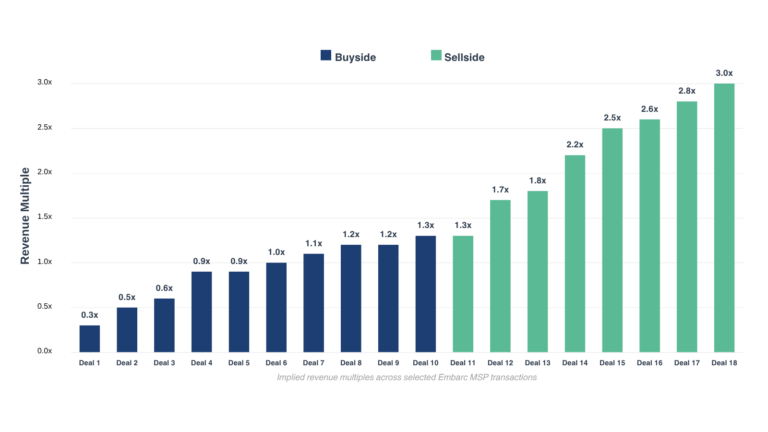
Buyers discount on uncertainty. When a business can’t quickly produce clean margin analysis, a credible forecast, or a coherent cash flow picture, the buyer builds that risk into their offer price. The discount isn’t arbitrary. It reflects the cost and risk of the cleanup work the buyer expects to do post-close.
That discount can be significant. And it’s almost always avoidable with the right financial infrastructure in place ahead of time.
The same dynamic plays out in capital raises. Lenders and investors are more likely to move quickly, offer better terms, and have more confidence in the relationship when the business they’re evaluating has a finance function that clearly knows what it’s doing.
Finding out where you stand
Most business owners have a rough sense of which tier they’re in. But a rough sense isn’t the same as knowing. And knowing is what allows you to close the gaps that matter most, in the right order, before they cost you something.
The Diligence Readiness Assessment is a 10-question self-assessment that scores your finance function against the same framework Embarc Advisors uses with M&A and CFO advisory clients. You’ll get a tier designation, a scored result across 10 dimensions, and a tier-specific report with the five highest-leverage moves to make next.
It takes five minutes. The results land in your inbox shortly after you submit.
Take the Diligence Readiness Assessment