
The businesses that make bold decisions well aren’t guessing. They’ve done the work that makes confidence possible. Here’s what that looks like and how to know when you’re ready.
Every business eventually reaches a moment where the next level of growth requires a decision that can’t be undone easily. A major hire. A significant investment. A capital raise. An acquisition. A sale. These are the moves that define a company’s trajectory. And the businesses that navigate them well almost never do it on instinct alone.
Step Seven is where the strategic finance framework pays its biggest dividend. The first six steps were about building the financial intelligence, operational discipline, and organizational alignment that make bold decisions possible. This step is about using all of that to actually make them.
The key word is readiness. Not every business is ready to make every move at every moment. The framework built across Steps 1 through 6 is what allows you to assess that readiness honestly and act with confidence when the answer is yes.
The readiness checklist
Before making any significant strategic move, a business should be able to answer yes to each of the following. These aren’t aspirational standards. They’re the baseline conditions that separate a well-positioned business from one that is taking on risk it can’t absorb.
✓ Clean, accrual-based financials with a chart of accounts that supports clear margin analysis
✓ A rolling cash flow forecast that gives you visibility into the next 13 weeks
✓ A defined set of KPIs that you track consistently and can explain to an outside party
✓ A credible budget and forecast with assumptions you can defend line by line
✓ A monthly budget vs. actuals (BvA) process that gives you a clear picture of over and underperformance
✓ A three-year goal, a one-year plan, and the right people in the right roles to execute both
If all six of those are in place, the business is ready to move. The budget tells you how much you can invest. The KPIs tell you early whether it’s working. And the financial infrastructure gives you the credibility to bring others along, whether investors, acquirers, or lenders.
Should you make a major hire?
A significant hire is often the first big move a growing business needs to make. And it’s one of the easiest to get wrong, either by waiting too long, moving too fast, or hiring for the business you have rather than the one you’re building.
The most common pattern in owner-operated businesses is a visionary CEO whose company has outgrown their capacity to drive both strategy and operations simultaneously. The next hire in that situation isn’t usually a salesperson or a marketer. It’s a strong operator: someone who can translate the vision into execution, manage the team, and free the CEO to focus on what they do best.
Similarly, if the business’s revenue depends entirely on the owner’s relationships and network, that’s a concentration risk that will limit growth and reduce value at a transaction. Building a sales function with dedicated talent and a repeatable process is a prerequisite for scaling beyond the founder.
The budget tells you what you can afford. The KPIs tell you what gap you most need to fill. And the forecast shows you what return you need the hire to generate to justify the investment.
Is now the right time for a big investment?
Big investments, whether expanding capacity, opening a new location, or upgrading technology infrastructure, share a common failure mode: they’re made reactively, in response to a problem that’s already costing the business, rather than proactively, in anticipation of an opportunity.
A business with clean financials and a credible forecast can model the investment decision properly. What does the capital outlay look like? What revenue or margin improvement does the investment need to generate to break even, and over what timeframe? What happens to cash flow in the interim? These aren’t complicated questions, but they require solid underlying data to answer reliably.
The same logic applies to technology decisions, marketing investments, and any other significant allocation of capital. The financial framework built across the prior six steps is what allows these decisions to be made analytically rather than emotionally.
Should you be raising capital?
Capital raises, whether from a bank, a private equity firm, or other investors, are fundamentally a credibility exercise. The capital provider is making a bet on the business’s ability to generate returns. The quality of your financial infrastructure is a direct signal of how that bet is likely to play out.
Businesses that walk into a capital raise with clean books, a track record of measuring against their forecast, and a clear story about what the capital will do and why it will generate a return are in a fundamentally different conversation than those that don’t. The former are negotiating terms. The latter are trying to establish basic credibility.
The strategic finance framework doesn’t guarantee a successful raise. But it removes the most common obstacles to one.
Are you positioned for an acquisition or a sale?
Whether the goal is to acquire another business or to sell your own, the financial readiness requirements are the same. Clean financials. Defensible margins. A management team that doesn’t depend on the owner for every decision. A forecast that a buyer or target can believe in.
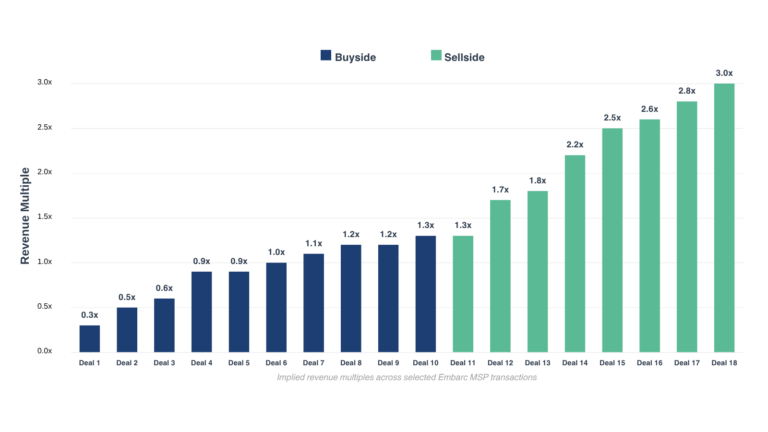
For businesses considering a sale, the work done across Steps 1 through 6 of this framework directly translates into transaction value. Buyers pay premiums for businesses that are predictable, well-documented, and not dependent on any single person. Every element of the strategic finance framework, from the chart of accounts to the monthly BvA to the organizational alignment, contributes to that profile.
For businesses considering an acquisition, the same infrastructure gives you the analytical capacity to evaluate targets properly, model integration scenarios, and assess whether a deal makes strategic and financial sense before you’re committed to it.
The bottom line
Steps 1 through 6 don’t just prepare you to make big moves. They determine the quality of the moves you’re able to make, the terms you can negotiate, and the outcomes you can realistically expect. The businesses that transact well, raise capital on favorable terms, and grow sustainably aren’t lucky. They’re prepared.
From framework to flywheel
The seven steps in this framework aren’t a one-time project. They’re a flywheel. Each time you complete a planning cycle, close the books, run a BvA, and adjust the forecast, the financial intelligence of the business compounds. The picture gets clearer. The decisions get better. The outcomes get more predictable.
That compounding effect is what separates companies that grow with intention from those that grow by accident. And it’s what makes the difference, at the moment that matters most, between a business that is ready and one that isn’t.
The framework is built. The question now is whether you use it.
This is the final post in the Strategic Finance series. Read the full series from the beginning or download the complete Strategic Finance Playbook below.
Want the full framework?
If you’re thinking about a transaction, a capital raise, or building the financial infrastructure to support the next stage of growth, the Embarc Advisors team is ready to connect.
Prefer a personal consultation?